1. Introduction
Integrative and complementary therapies have been increasingly incorporated into contemporary healthcare systems as adjuvant strategies for symptom management, particularly in contexts where reduction of pharmacological burden and minimization of adverse effects are prioritized.1 Non-invasive, low-risk interventions have gained prominence in symptom-management contexts, particularly where reduction of pharmacological burden and minimization of adverse effects are prioritized. In foot reflexology research, studies have demonstrated reductions in postpartum uterine pain,2 improvements in depressive symptoms during climacteric periods,3 attenuation of infant colic symptoms,4 and potential modulation of breastfeeding-related outcomes in neonatal settings.5,6 These developments reflect the broader institutionalization of complementary and integrative medicine (CIM) within global health systems and its progressive alignment with patient-centered care models.1,7
Foot reflexology is a non-invasive manual therapy involving tactile stimulation of specific plantar zones. Its proposed mechanisms include modulation of autonomic activity, particularly parasympathetic activity, which is supported by physiological evidence.8 However, broader claims involving relaxation and neuroendocrine pathways remain hypothetical. Controlled studies have demonstrated potential benefits in the populations and outcomes cited above.2–6
Despite increasing clinical interest, reflexology remains a debated intervention within the broader biomedical community. Questions persist regarding the specificity of reflex zone mapping, mechanistic plausibility, and the heterogeneity of clinical trial methodologies. Effect sizes reported across randomized trials vary substantially, and methodological limitations such as small sample sizes, lack of blinding, and inconsistent protocol standardization have been noted in prior evaluations. Consequently, the scientific positioning of reflexology oscillates between integrative supportive care and a contested complementary practice.
Nevertheless, randomized trials conducted in specific maternal and early-life contexts suggest that reflexology may influence clinically relevant outcomes, including postpartum uterine pain, depressive symptoms during climacteric periods, infant colic symptoms, and breastfeeding-related outcomes in neonatal settings.2–6 Although effect sizes and methodological robustness vary across studies, these findings suggest potential benefits under structured conditions and support further investigation using standardized protocols and adequately powered designs.
Despite the growing body of clinical research on foot reflexology, the structural evolution, thematic consolidation, and global dissemination patterns of this field remain insufficiently characterized. While individual trials and narrative reviews have explored specific clinical outcomes, a comprehensive bibliometric mapping capable of identifying longitudinal growth trajectories, conceptual clustering, geographic distribution of impact, and editorial consolidation is still lacking. Understanding how the field has evolved over time, which thematic domains predominate, and how scientific influence is distributed across countries, institutions, and authors is essential for contextualizing current evidence and guiding future research directions. Therefore, a systematic bibliometric analysis can provide an integrative overview of the intellectual structure and developmental dynamics of foot reflexology research.
A previous bibliometric analysis of foot reflexology was published by Cai et al. (2023),9 who examined 801 documents indexed in the Web of Science Core Collection between 1991 and 2021. Their study identified Wyatt, Sikorskii, and Victorson as the most productive authors. While the present analysis confirms the prominent roles of Wyatt and Sikorskii (ranking first and third, respectively), Ernst emerged as the second most productive author. Victorson, although ranking seventh in publication output, remains structurally central in the collaboration network. These findings partially overlap with those of Cai et al. while also revealing additional key contributors in the broader, multi-database corpus. The present study extends the literature in several important respects by covering a substantially longer period (1915–2025), incorporating three major databases (PubMed, Scopus, and Web of Science), and applying a broader range of analytical techniques, such as Bradford’s Law, association-strength-normalized networks with Louvain clustering, strategic thematic mapping, author centrality metrics, and trending topic analysis with interquartile ranges. In addition, the study examines corresponding-author country distributions.
This study provides a comprehensive overview of foot reflexology research from 1915 to 2025, the period extending from the earliest indexed publication identified across the three databases to the most recent records available, by examining publication trends, mapping the intellectual and conceptual structure of the field, identifying the most influential countries, institutions, and authors, and analyzing the evolution of research themes over time.
2. Methods
2.1. Study Design and Reporting Guidelines
This study consisted of a systematic bibliometric analysis of the global scientific literature on foot reflexology. The review was reported in accordance with the Preliminary Guideline for Reporting Bibliometric Reviews of the Biomedical Literature (BIBLIO)10 (completed BIBLIO checklist provided in Supplementary Table S1), and was informed by the Guidelines for Bibliometric-Systematic Literature Reviews (BSLR)11 for the analytical workflow and science mapping procedures. Together, these frameworks provide structured guidance for bibliometric reporting, performance analysis, science mapping techniques, and longitudinal thematic exploration.
The BIBLIO reporting framework and the BSLR analytical recommendations were adopted to enhance transparency and reproducibility through explicit documentation of database selection, search strategy, data extraction, cleaning procedures (including duplicate removal and keyword harmonization), temporal filtering, and analytic parameters used for network construction and visualization.
Performance indicators (e.g., annual scientific production, most productive authors, journals, institutions, and countries) were combined with science mapping approaches, including co-authorship, and keyword co-occurrence analyses. Network normalization was performed using association strength, and clustering was conducted using the Louvain algorithm. Conceptual structure analysis was explored through multiple correspondence analysis (MCA) to identify thematic clusters and intellectual structure within the field.
2.2. Data Sources and Search Strategy
A systematic search was conducted across three major databases—PubMed, Scopus, and Web of Science (WoS)—on May 3, 2026, with a temporal cutoff for publication up to December 31, 2025. The search strategy included the use of various keywords such as “Reflexotherapy”[Mesh], reflexolog*, “foot reflexology”, “plantar reflexology”, “zone therapy”, and “reflex therapy”. The queries were tailored for each database, using relevant fields such as Mesh and tiab in PubMed, TITLE-ABS-KEY in Scopus, and TS (Topic) in Web of Science.
For transparency and reproducibility, the full search strategy, including the complete search queries used for each database, is provided in the Supplementary Materials. A table detailing the exact search queries and parameters used for each database is available in the Supplementary Table S2.
To maximize search sensitivity, broader reflexology-related terms (e.g., reflexology, reflexotherapy, zone therapy, and reflex therapy) were included in addition to foot-specific terms (e.g., foot reflexology and plantar reflexology). A post-hoc audit of the final dataset was conducted to identify records potentially related to non-foot reflexology modalities. Titles, abstracts, and keywords (DE and ID fields) of all 2,879 records were combined and screened using string detection for the following terms (case insensitive): “hand reflexology”, “auricular reflexology”, “ear reflexology”, “palm reflexology”, and “hand therapy”. This procedure identified a small number of suspect records, which were then manually reviewed. After verification, only 29 records (1.0%) were considered potentially related to non-foot reflexology modalities. The initial screening and manual verification were performed by M.H.L.F. Ambiguous cases were resolved through discussion and consensus among the authors. The audit confirmed that the retrieved literature overwhelmingly addressed foot reflexology.
2.3. Inclusion and Exclusion Criteria
Eligible studies were those indexed in the selected databases that addressed foot reflexology in clinical, experimental, rehabilitative, or integrative health contexts. No restrictions were applied regarding study design or methodology. Studies focused on therapeutic applications across fields such as medicine, nursing, oncology, rehabilitation, complementary medicine, and public health were included.
Duplicate records identified across databases were detected and removed using automated matching procedures based on title, Digital Object Identifier (DOI), and author names. Manual verification was performed in cases of missing or incomplete DOI, highly similar titles without an exact match, or inconsistent author metadata across databases.
Documents with incomplete or inconsistent metadata were retained for the descriptive analysis of overall scientific production. However, they were excluded from specific science mapping analyses that required structured metadata (e.g., country of origin, institutional affiliation, collaboration networks, and keyword co-occurrence), ensuring the analytical accuracy of these specific analyses without compromising global productivity estimates. The same inclusion and exclusion criteria were applied across all databases.
2.4. Data Extraction and Preparation
The retrieved records were exported from the selected databases in compatible formats (BibTeX and plain text) and merged into a single dataset for bibliometric processing. Data cleaning and harmonization procedures were performed prior to analysis and included: duplicate removal, standardization of bibliographic fields (e.g., publication year, source title, authorship, institutional affiliations, and keywords), and correction of indexing inconsistencies across databases.
Author names, institutional affiliations, and keywords were normalized to reduce fragmentation caused by spelling variations, abbreviations, and database-specific formatting. Temporal filtering was applied to retain publications indexed up to December 31, 2025.
Duplicate records were identified and removed through automated matching on title, DOI, and author information, followed by manual verification when metadata were incomplete or ambiguous. Author names, affiliations, and keywords were normalized, and bibliographic fields were harmonized across databases using standardized coding rules prior to analysis.
Two distinct counting schemes were applied for country-level indicators. Corresponding-author country counts were used to identify the most productive countries based on the affiliation of the corresponding author. In contrast, country-affiliated publication counts (used in Table 3) considered all publications with at least one author affiliated with a given country. These counts are non-exclusive, as publications with authors from multiple countries were attributed to each participating country.
Bibliometric analyses were performed using the bibliometrix package (version 5.2.1)12 in the R statistical environment (version 4.5.1)13 via the RStudio interface.14 This workflow enabled the integrated execution of performance indicators (e.g., annual production, leading authors, sources, countries, and institutions), collaboration network analyses, co-citation mapping, and keyword co-occurrence analyses.
Network normalization was performed using the association strength method, and clustering was conducted using the Louvain algorithm. Graphical outputs and refined visualizations were generated using the ggplot2 package (version 4.0.0).15
To enhance visualization and validate conceptual clustering patterns, keyword co-occurrence maps were also constructed using VOSviewer (version 1.6.20),16 applying the default layout and clustering parameters.
2.5. Bibliometric Analyses
Following the framework proposed by Marzi et al. (2025),11 the bibliometric analysis was structured into three complementary analytical stages: performance analysis, dynamic analysis, and conceptual mapping.
Performance analysis focused on descriptive indicators of scientific productivity, including annual publication output, leading authors, most productive institutions, contributing countries, and core journals. Citation metrics and source impact were also examined to characterize the structural profile of the field.
Dynamic analysis explored the temporal evolution of scientific production and the consolidation of publication venues over time. Longitudinal patterns were assessed to identify growth phases, thematic expansion, and the progressive stabilization of core journals within the domain of foot reflexology research.
The compound annual growth rate (CAGR) was calculated from the annual publication counts using the standard formula (V_final / V_initial)^(1/n) − 1, where V_final and V_initial represent the number of publications in 2025 and in the first year with indexed output (1915), respectively, and n corresponds to the number of years in the observation period.
Conceptual mapping was conducted through keyword co-occurrence network analysis to identify thematic clusters and the intellectual structure of the field. Network normalization was performed using the association strength method, and clusters were identified using the Louvain algorithm. In addition, trending topic analyses were performed to evaluate thematic shifts over time, with temporal distributions summarized using median publication year and interquartile ranges (Q1–Q3) to characterize periods of thematic prominence.
Purely descriptive indicators were presented in tabular format, whereas dynamic and conceptual analyses were displayed graphically, in accordance with established recommendations for systematic bibliometric reviews.
2.6. Methodological Quality Assessment
A formal methodological quality assessment of individual studies was not performed, in accordance with established guidelines for bibliometric and science mapping reviews.
3. Results
3.1. Identification and Selection of Studies
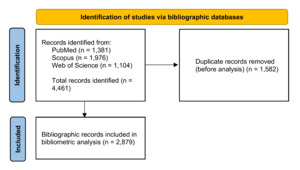
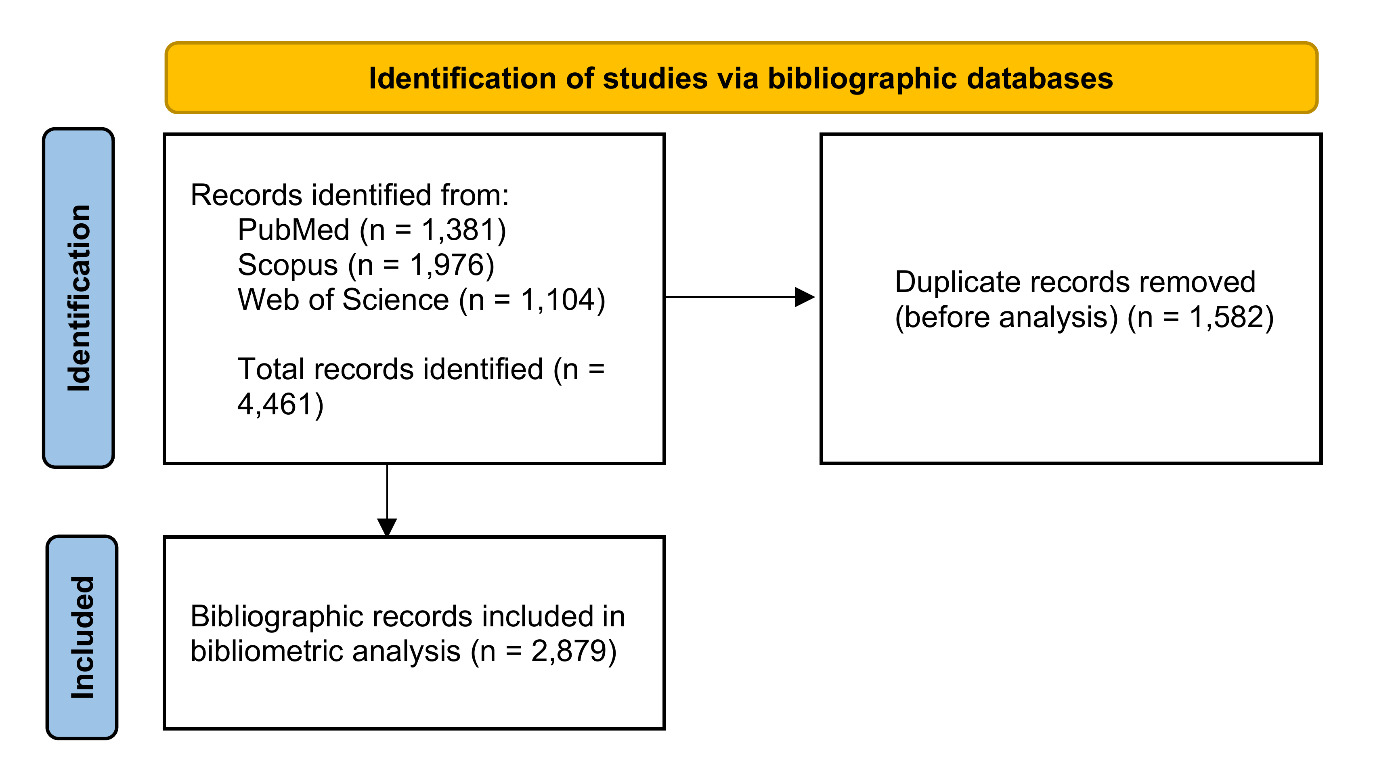
Figure 1 summarizes the database retrieval process, duplicate removal, and construction of the final bibliometric dataset. The searches conducted in PubMed, Scopus, and Web of Science identified a total of 4,461 records (PubMed: n = 1,381; Scopus: n = 1,976; Web of Science: n = 1,104). After removal of duplicate records across databases, 2,879 unique documents published between 1915 and 2025 were included in the final dataset. No additional eligibility screening was performed, as the objective was to construct a comprehensive bibliometric corpus based on the predefined search strategy. Records with incomplete or insufficient metadata were retained only for the descriptive analysis of overall scientific production but were excluded from network-based and conceptual analyses.
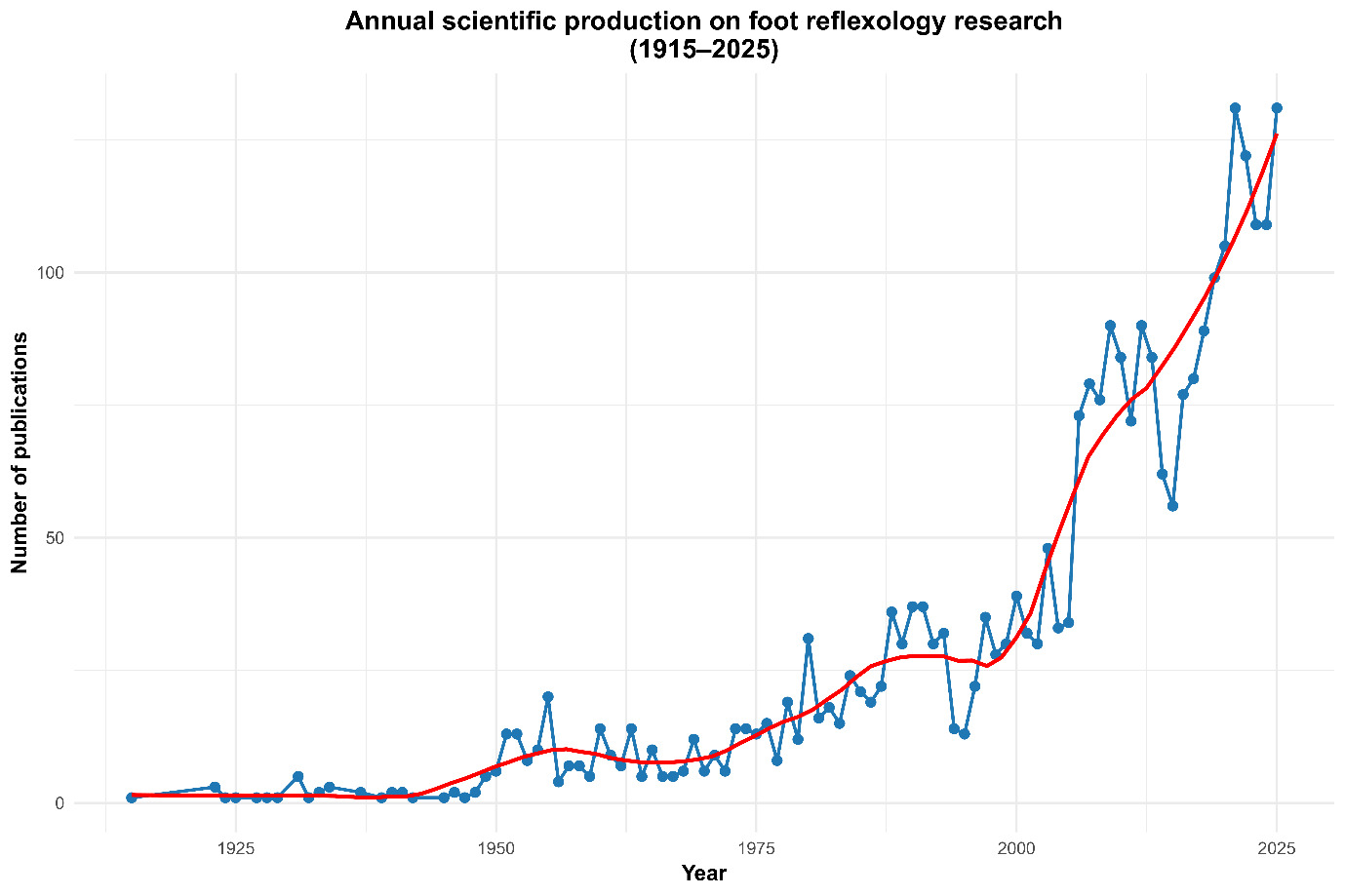
Scientific production accelerated markedly after the mid-2000s, reaching a peak of 131 publications in 2025. The corpus demonstrated broad international participation, with Iran (n = 206), the United States (n = 202), and the United Kingdom (n = 175) emerging as the most productive corresponding-author countries. Citation impact was concentrated in the United States (21,650 total citations) and the United Kingdom (12,301), while Canada and Norway exhibited the highest average citations per article (44.7 and 43.0, respectively). Complementary and integrative medicine journals dominated the publication landscape, particularly Complementary Therapies in Clinical Practice (64 articles) and Complementary Therapies in Medicine (58 articles). Keyword analysis revealed strong thematic concentration around reflexology, massage, pain, anxiety, and complementary medicine frameworks, indicating sustained emphasis on symptom management and integrative care contexts.
3.2. Annual Scientific Production
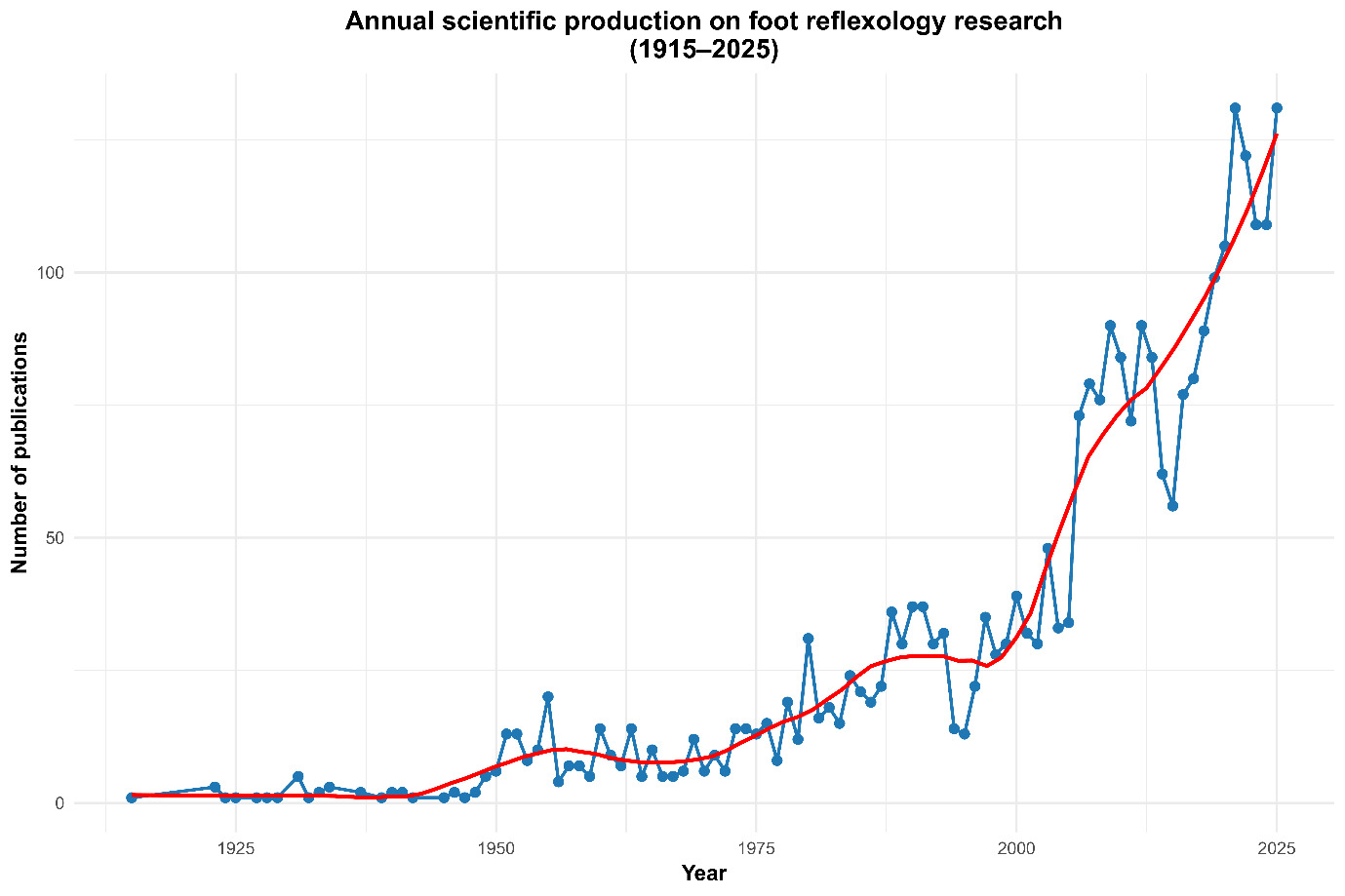
Figure 2 shows the annual scientific production in foot reflexology research. Output spans more than a century, with the earliest indexed publication identified in 1915. Output remained sparse and irregular for several decades, reflecting an early exploratory phase of limited scientific consolidation.
A gradual growth trajectory became evident during the 1990s, followed by a marked acceleration beginning in the mid-2000s. The most pronounced expansion occurred after 2018, with annual production consistently exceeding 80 publications and reaching a peak of 131 publications in 2025.
Across the entire 1915–2025 period, the CAGR was 4.53%, reflecting the long-term expansion of foot reflexology research despite prolonged early phases of low and irregular scientific output.
3.3. Most Relevant Sources
Table 1 presents the most relevant publication sources in foot reflexology research. An overview of journal productivity in the field of foot reflexology research reveals a clear concentration of scientific output within specialized complementary and integrative medicine journals. Complementary Therapies in Clinical Practice emerges as the leading source with 64 publications, followed by Complementary Therapies in Medicine with 58 articles. These journals have solidified their roles as primary outlets for disseminating clinical and applied research in reflexology and related complementary therapies.
The Journal of Alternative and Complementary Medicine (34 articles) and the European Journal of Integrative Medicine (28 articles) further underscore the prominence of integrative health journals in shaping the scientific landscape of the field. The inclusion of Evidence-Based Complementary and Alternative Medicine (24 articles) highlights the growing emphasis on methodological rigor and evidence-based approaches within complementary medicine research.
Interestingly, the inclusion of journals such as Supportive Care in Cancer, BMC Complementary and Alternative Medicine, and Complementary Therapies in Nursing and Midwifery suggests a progressive integration of reflexology research into oncology care, nursing practice, and broader clinical contexts. The presence of Ugeskrift for Laeger (36 articles) and Krankenpflege. Soins Infirmiers (24 articles) reflects regional and professional dissemination channels contributing to the field’s development.
These findings show both the consolidation of specialized complementary medicine journals and the diversification of publication venues, reflecting the clinical expansion and interdisciplinary maturation of reflexology research.
3.4. Editorial Concentration and Bradford’s Law Distribution
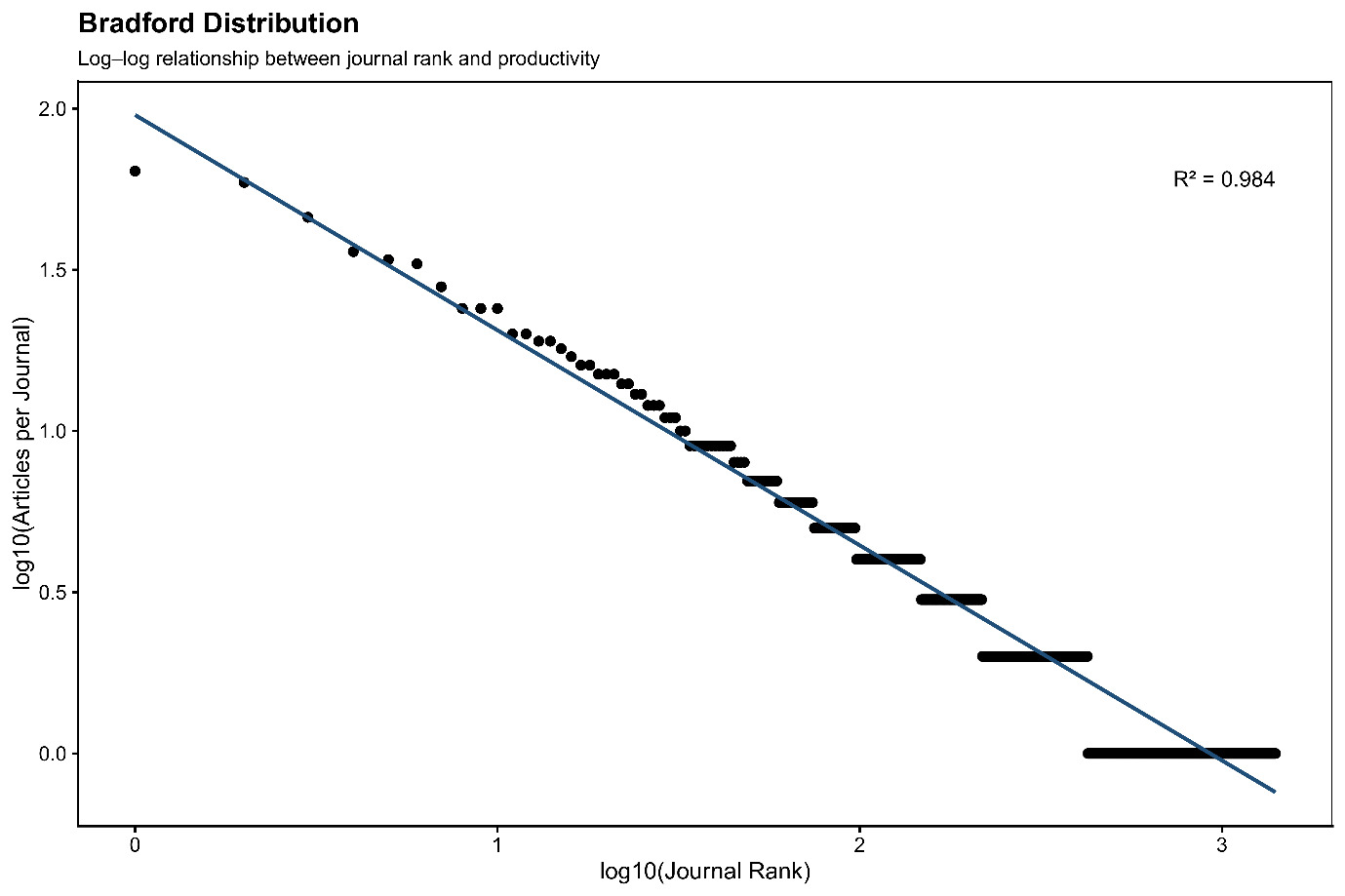
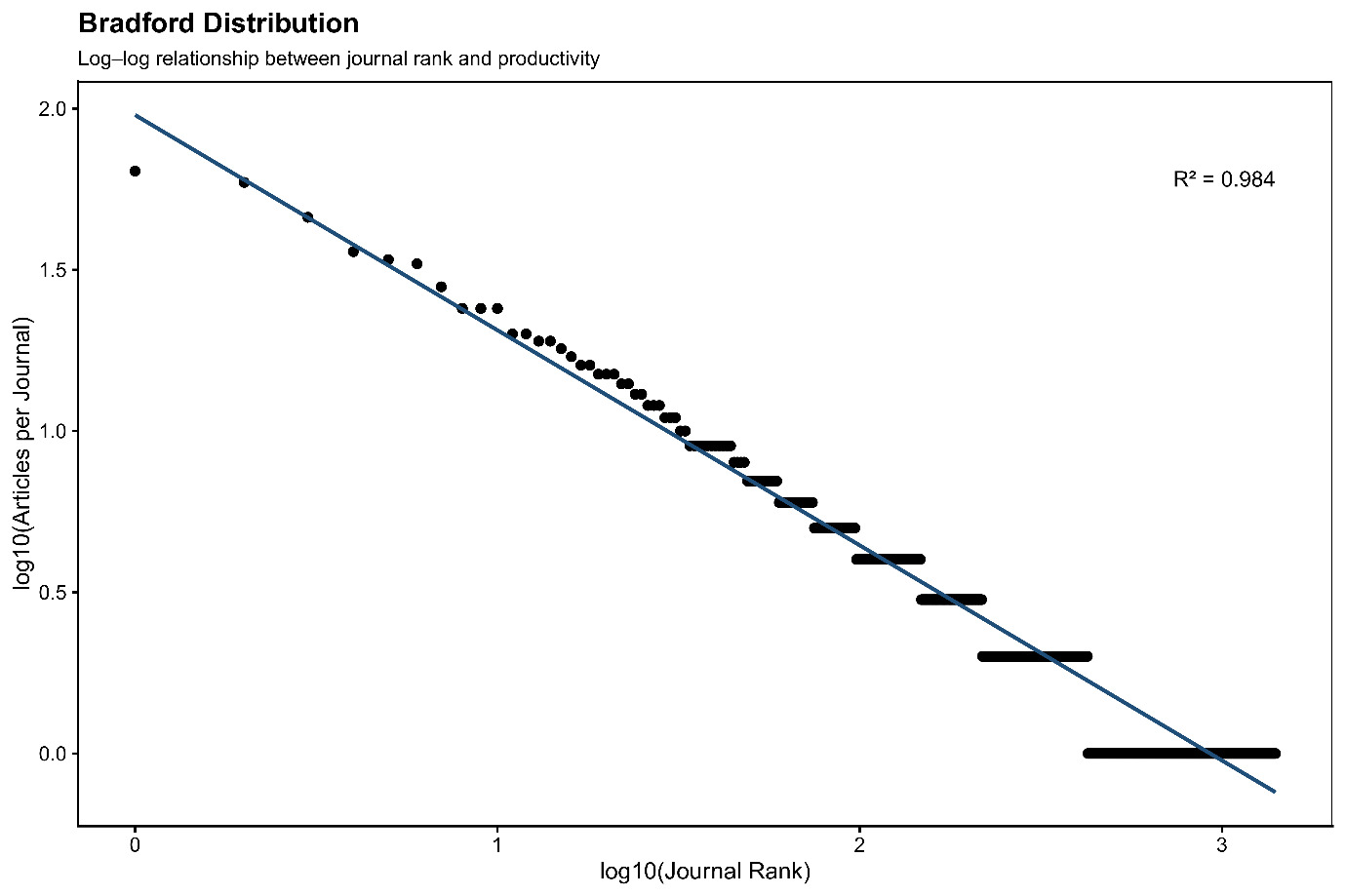
Figure 3 presents the Bradford’s Law distribution of journals in foot reflexology research. To further examine the concentration of scientific output across publication venues, Bradford’s Law was applied to evaluate the distribution of articles among journals. The log–log representation demonstrated a strong linear relationship between journal rank and productivity (R² = 0.984), indicating a highly consistent adherence to a power-law distribution.
The results reveal a well-defined core–periphery structure, in which a small group of journals accounts for a disproportionately large share of publications, while a long tail of peripheral sources contributes marginally to overall output. The high goodness-of-fit observed reinforces the robustness of this distribution pattern, confirming a pronounced editorial concentration within specialized complementary and integrative medicine journals. This finding highlights the structural consolidation of the field, with knowledge dissemination strongly anchored in a limited number of core sources.
3.5. Temporal Evolution of Leading Journals
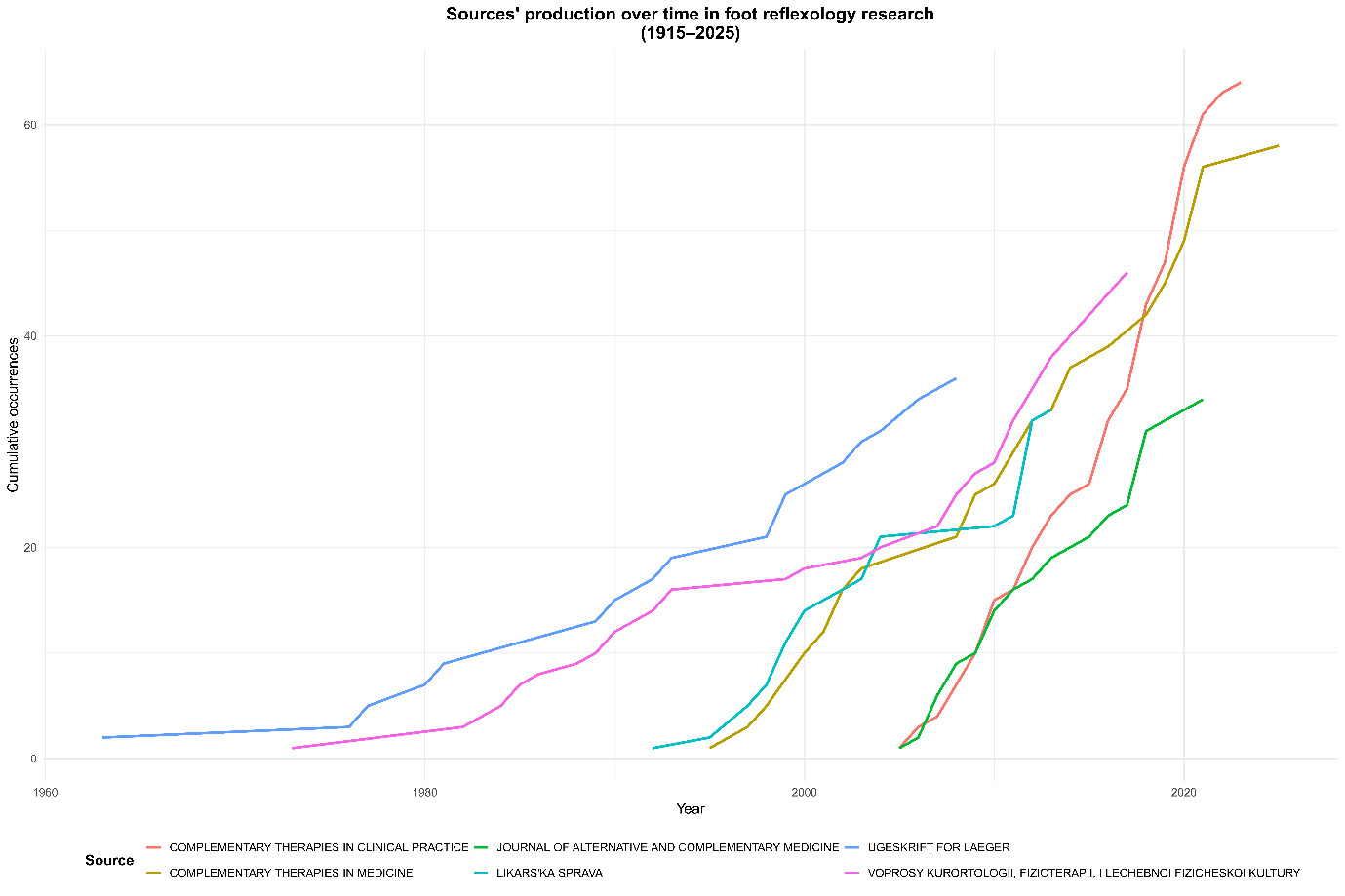
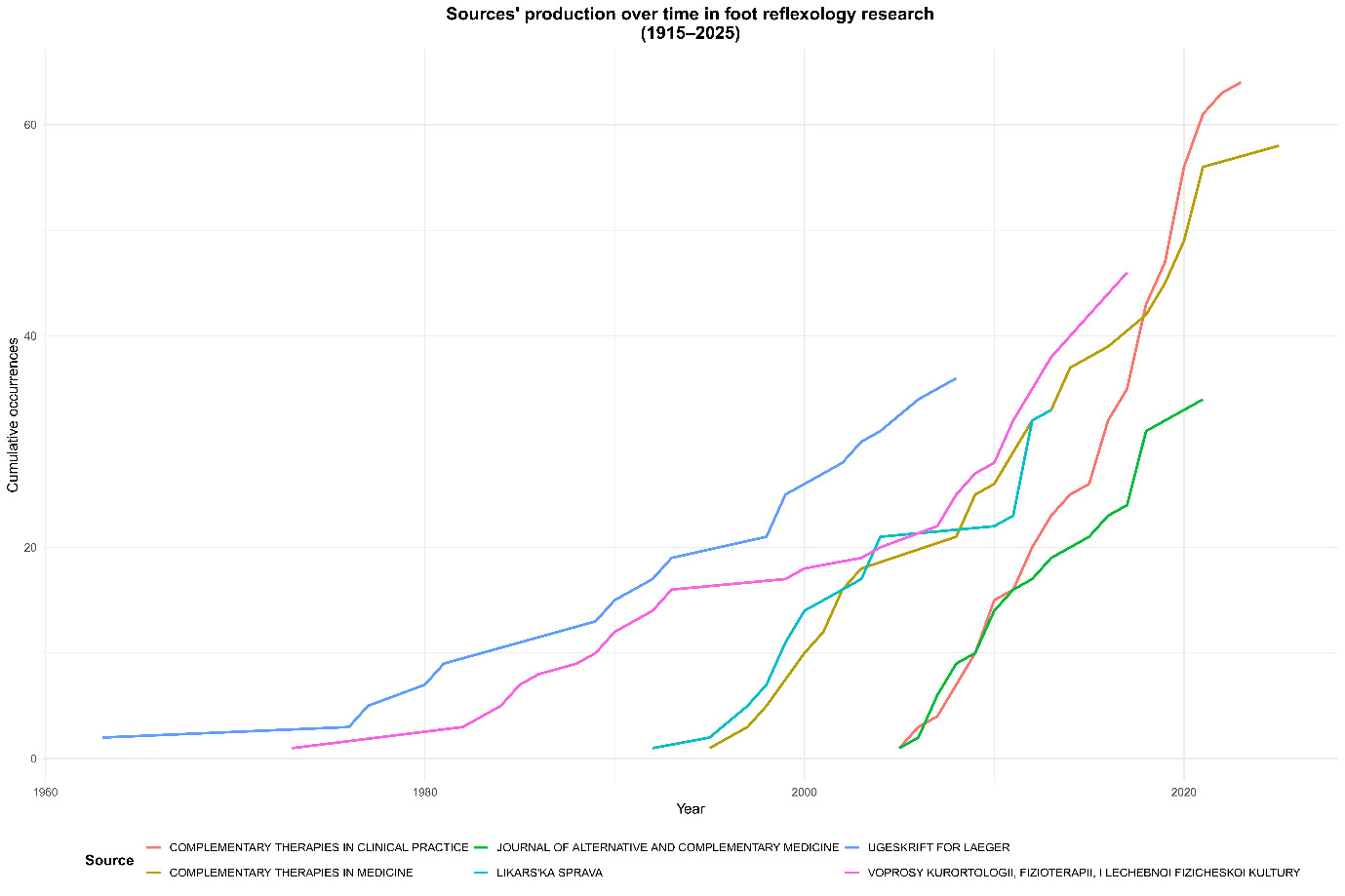
Figure 4 illustrates the temporal evolution of scientific output across the leading journals in foot reflexology research. An analysis of publication trends reveals heterogeneous trajectories across both specialized complementary medicine journals and journals with a national or regional scope.
Complementary Therapies in Clinical Practice demonstrates the most pronounced cumulative growth, particularly from the mid-2010s onward, ultimately emerging as the leading outlet in terms of total publication volume.
Complementary Therapies in Medicine exhibits a sustained and progressive growth pattern over time, with a notable acceleration after the early 2000s, consolidating its role as a core journal within the complementary and integrative medicine domain.
In contrast, Ugeskrift for Laeger presents an earlier onset of publications, with a more gradual and stable accumulation over time, suggesting its role in the initial dissemination of reflexology-related research within more traditional medical contexts.
Voprosy Kurortologii, Fizioterapii i Lechebnoi Fizicheskoi Kultury also shows an early and steady trajectory, with consistent contributions over several decades, reflecting the historical relevance of physiotherapy and rehabilitation-oriented research streams, particularly in Eastern European contexts.
More recent growth patterns are observed in Likars’ka Sprava and the Journal of Alternative and Complementary Medicine, both of which display increasing cumulative output from the late 2000s onward, indicating expanding engagement with reflexology within integrative and clinical research frameworks.
Taken together, these findings highlight a dual pattern of development characterized by early contributions from journals with a national or regional focus and more recent, rapid expansion driven by specialized complementary medicine outlets. This evolution reflects both the historical roots and the contemporary consolidation of reflexology research.
3.6. Most Productive Authors
Table 2 presents the most productive authors in foot reflexology research between 1915 and 2025. The analysis indicates that scientific output is concentrated within a relatively limited group of researchers. Wyatt G emerges as the most productive author in the field, with 29 publications, followed by Ernst E (27) and Sikorskii A (26). Other highly productive contributors include Hughes C (15), Ben-Arye E (14), Schiff E (13), and Victorson D (12), reflecting a consistent pattern of contribution among leading authors.
The distribution of publication output suggests a pattern of distributed scientific leadership, without the presence of a single overwhelmingly dominant author. Instead, the field appears to be structured around multiple active research groups contributing consistently over time.
3.7. Structural Centrality in the Author Collaboration Network
To further characterize the structural organization of the field, centrality metrics were computed within the author collaboration network. Eigenvector centrality identified Wyatt G (1.00) and Sikorskii A (0.96) as the most structurally influential authors, reflecting their strong embeddedness within highly interconnected collaborative communities. Victorson D (0.65) and Lehto R (0.46) also occupied prominent positions, indicating sustained integration within active research clusters.
Degree and weighted strength measures further confirmed the central roles of Wyatt G (degree = 57; strength = 137) and Sikorskii A (degree = 46; strength = 116), demonstrating extensive collaborative reach and repeated co-authorship ties. Additional contributors, including Badger T, Frambes D, and Tesnjak I, also exhibited moderate levels of connectivity and influence within the network structure.
Although betweenness centrality values were generally low across authors, Wyatt G displayed the highest intermediary role (0.0095), suggesting a limited but notable function in bridging partially distinct collaboration clusters.
Overall, the collaboration network reveals a semi-centralized yet distributed structure, characterized by influential core contributors embedded within cohesive research groups, rather than a highly centralized or fragmented configuration.
3.8. Most Cited Countries
Table 3 presents the top 10 countries ranked by total citation impact in foot reflexology research between 1915 and 2025. Country-affiliated publication counts were used, considering all publications with at least one author affiliated with each country. The United States and the United Kingdom emerge as the primary global hubs of scientific influence, concentrating the highest citation counts. The United States leads by a substantial margin (21,650 citations), followed by the United Kingdom (12,301 citations), reflecting both high productivity and strong global impact.
Among other highly cited countries, Australia (45.0), Canada (44.7), and Norway (43.0) stand out for their elevated average citations per article, indicating strong per-document impact despite comparatively lower publication volumes. In contrast, Iran, which ranks third in total citations (7,082), demonstrates the highest publication volume (752 articles) but a comparatively lower average citation rate (9.42), suggesting a high-output but lower-impact profile per article.
The geographic distribution of citation impact reveals a predominance of high-income countries, particularly in North America and Europe, alongside significant contributions from Asia and the Middle East, including China, Iran, and Turkey. These findings indicate both the consolidation of influence within established research systems and the progressive global expansion of foot reflexology research.
3.9. Most Productive Countries
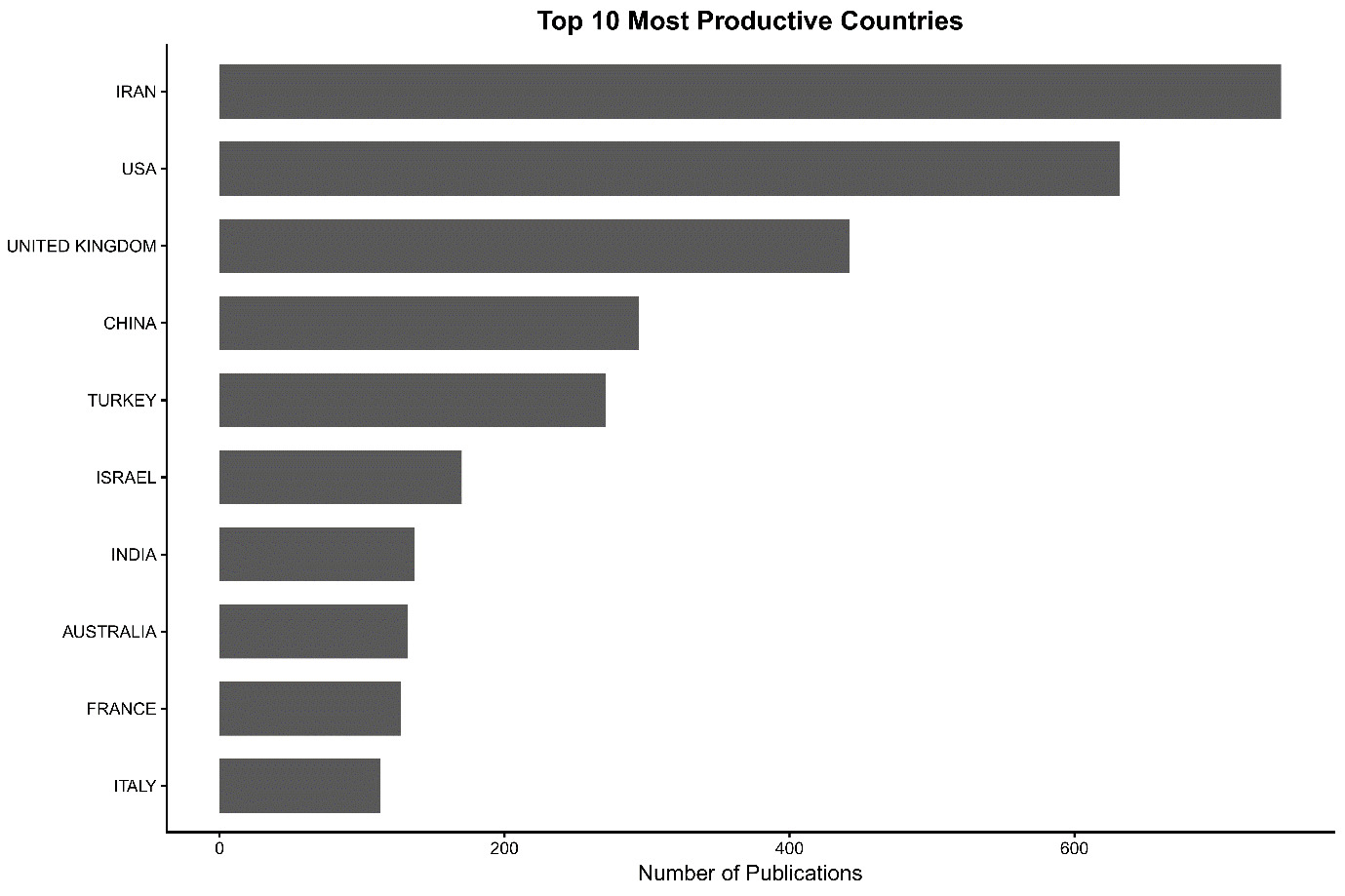
Figure 5 illustrates the geographic distribution of scientific production in foot reflexology research. The distribution of publications reveals a strong concentration of research activity in a limited number of countries. Iran emerges as the leading contributor, with the highest number of publications, surpassing traditionally dominant research hubs such as the United States and the United Kingdom. This pattern indicates a notable expansion of scientific output in the field within the Middle East.
The United States and the United Kingdom maintain prominent positions, reflecting their sustained contribution to the field and continued relevance within the global research landscape. China and Turkey also demonstrate substantial productivity, highlighting the growing role of Asian countries in the dissemination of reflexology research.
Additional contributions from countries such as Israel, India, Australia, France, and Italy further illustrate the geographic diversification of research activity. Overall, the distribution suggests a shift toward a more globally distributed production landscape, combining strong contributions from both established scientific systems and emerging research regions.
.png)
3.10. Most Relevant Affiliations
Table 4 presents the most relevant institutional affiliations in foot reflexology research. An overview of institutional affiliations indicates that scientific production between 1915 and 2025 is broadly distributed across a wide range of organizations, with no single institution demonstrating overwhelming dominance. Among identifiable institutions, University of Medical Sciences appears as the most frequent affiliation, followed by institutions such as University of London and University of Exeter.
Notably, the prominence of generic labels such as “University of Medical Sciences” reflects limitations in database indexing, which may inflate the apparent contribution of non-specific institutional categories and reduce precision in attribution.
Overall, these findings suggest that scientific production in foot reflexology research is primarily anchored in university-based and healthcare institutions, with strong representation from academic and clinical centers across multiple regions.
3.11. International Collaboration Network
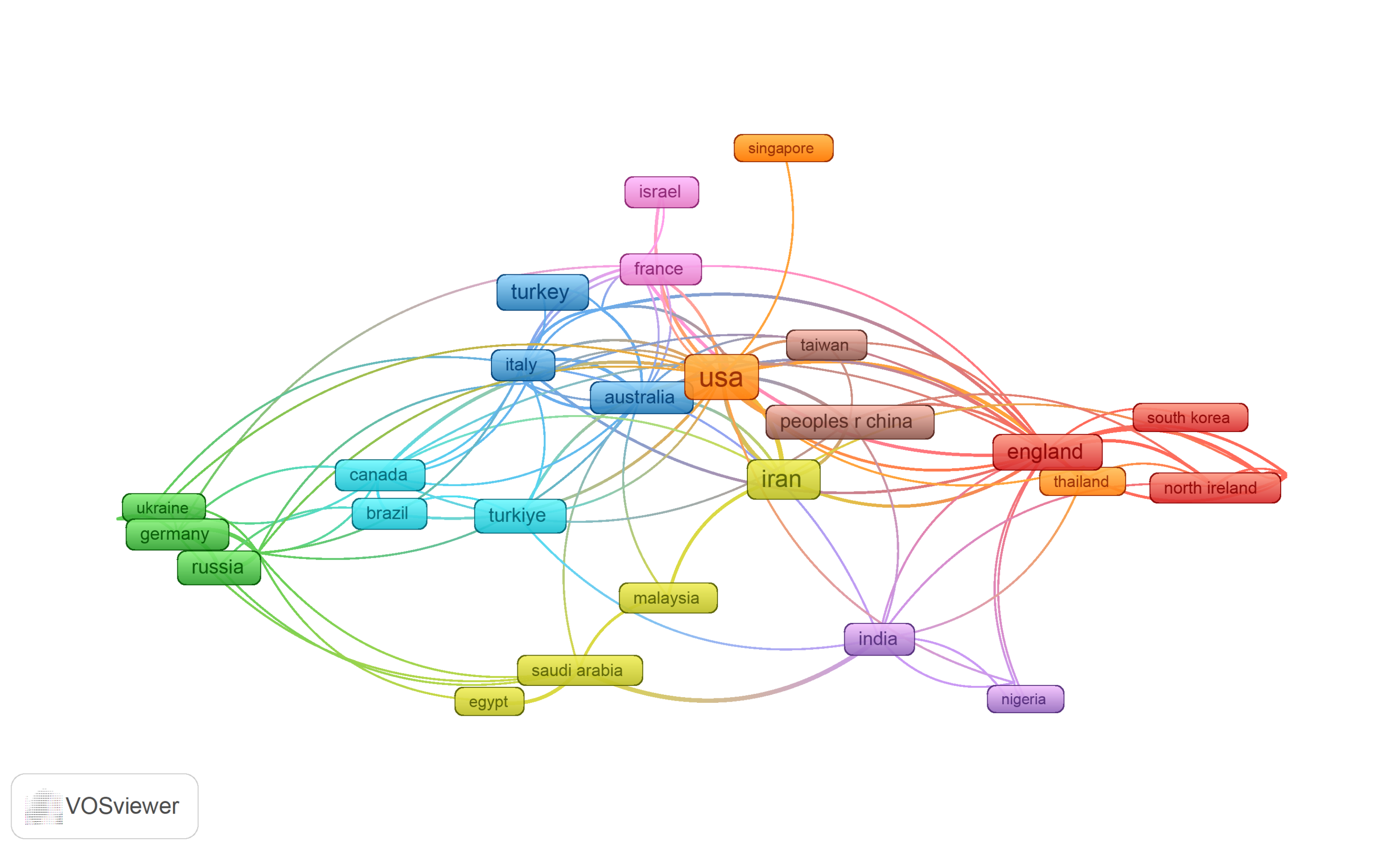
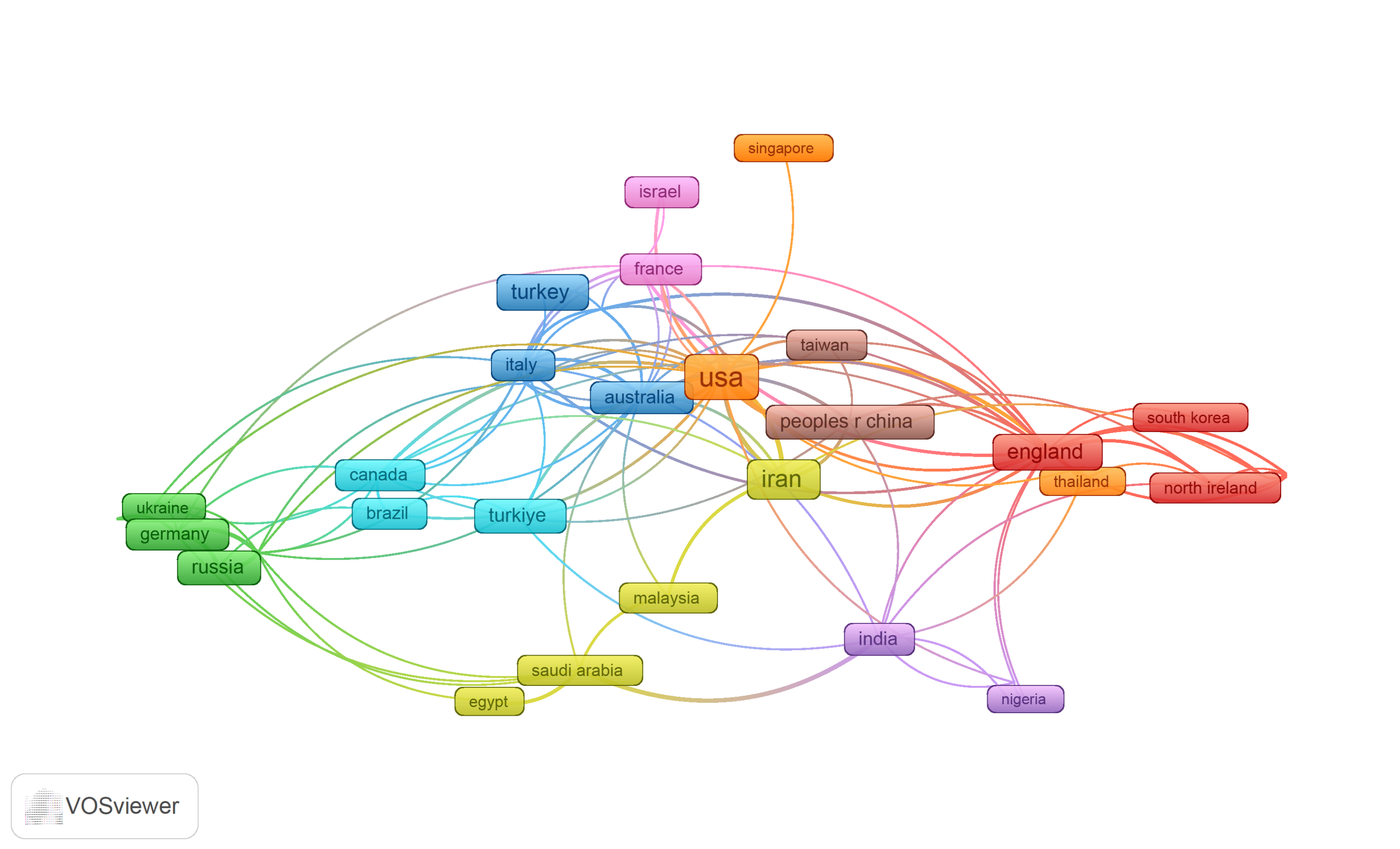
The international collaboration network exhibits a multi-clustered structure with a central bridging core, rather than a strictly centralized configuration (Supplementary Figure S1). The United States occupies the most central position, acting as the primary connector across multiple clusters and facilitating interactions between geographically distinct regions.
A prominent secondary hub is formed by England, which anchors a well-defined cluster linking countries such as South Korea, Thailand, Northern Ireland, and China, indicating a strong and relatively cohesive regional collaboration pattern. In parallel, Iran represents another central node, positioned between clusters and maintaining connections with countries including Malaysia, India, and Saudi Arabia, reflecting a hybrid role bridging regional and global collaboration.
European countries such as Italy and France appear as important intermediaries, connecting Western and Middle Eastern/Asian clusters, while Turkey also contributes to cross-regional integration. On the periphery, a distinct cluster composed of Germany, Russia, and Ukraine demonstrates strong internal connectivity but comparatively limited integration with the global core.
Additional countries such as Canada, Brazil, and Australia are moderately connected and positioned between core and peripheral zones, reinforcing the transitional structure of the network.
Overall, the collaboration pattern reflects a core–periphery system with multiple regional hubs, where globally connected central countries coexist with regionally cohesive clusters. This configuration highlights the increasing internationalization of foot reflexology research, while also revealing persistent regional collaboration dynamics.
3.12. Conceptual Structure and Keyword Co-occurrence
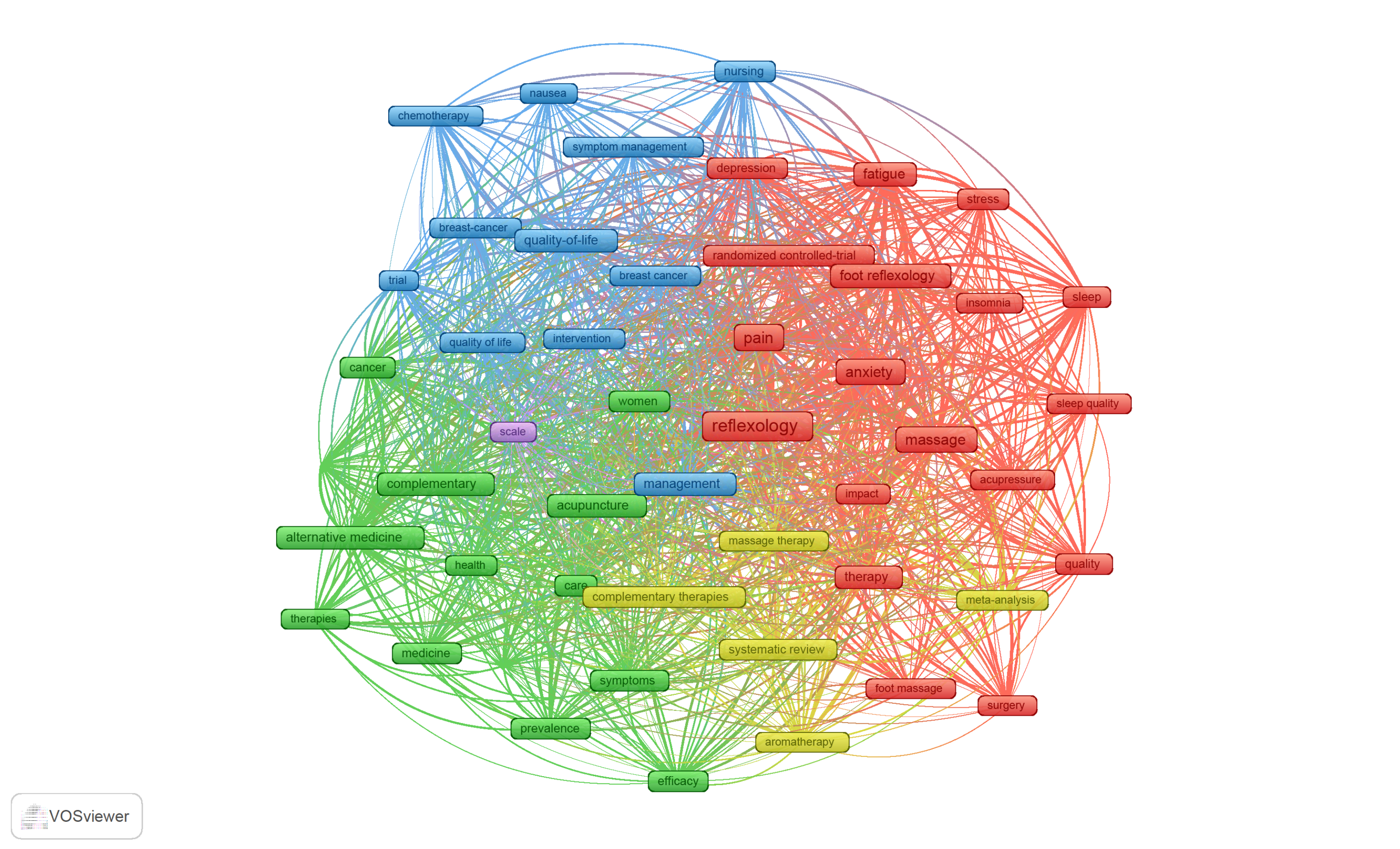
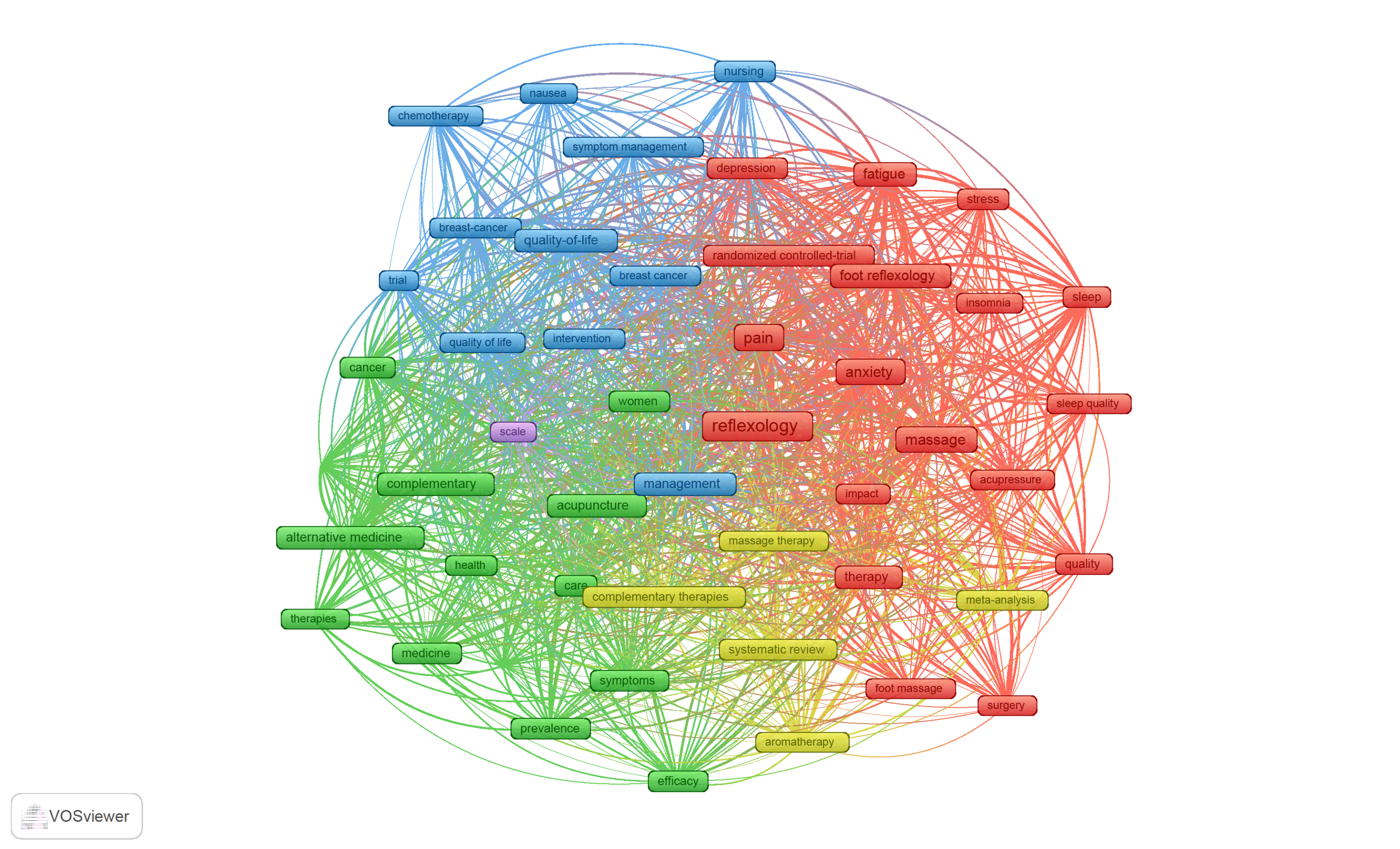
The conceptual structure map reveals a highly interconnected and multi-clustered thematic landscape, with substantial overlap between domains rather than clearly isolated research areas (Supplementary Figure S2). The network is organized around several densely connected clusters that collectively define the intellectual structure of foot reflexology research.
The dominant cluster (red) forms the central core of the network and is focused on clinical symptom management, with high-frequency terms such as reflexology, pain, anxiety, fatigue, sleep, and massage. This cluster represents the primary clinical application of reflexology, emphasizing its role as a complementary intervention for symptom relief, psychological well-being, and sleep-related outcomes.
A second major cluster (green) reflects the broader complementary and integrative medicine (CIM) and population health framework, incorporating terms such as alternative medicine, complementary, health, prevalence, and efficacy. This cluster demonstrates the integration of reflexology within a wider therapeutic and public health context.
The blue cluster is strongly associated with clinical and hospital-based research, particularly in oncology and nursing contexts. It includes terms such as quality of life, chemotherapy, breast cancer, nursing, nausea, and symptom management, indicating a substantial concentration of studies evaluating reflexology in supportive care settings.
A smaller but clearly defined cluster (yellow) encompasses methodological and evaluative approaches, including systematic review, meta-analysis, and massage therapy, reflecting increasing efforts toward evidence synthesis and methodological consolidation in the field.
Overall, the conceptual network demonstrates a densely interconnected and multidimensional research structure, in which clinical symptom management, oncology supportive care, integrative medicine, and methodological development are closely linked. This pattern highlights the structural consolidation of the field and its evolution toward increasingly integrated and evidence-based research frameworks.
3.13. Thematic Structure and Strategic Diagram
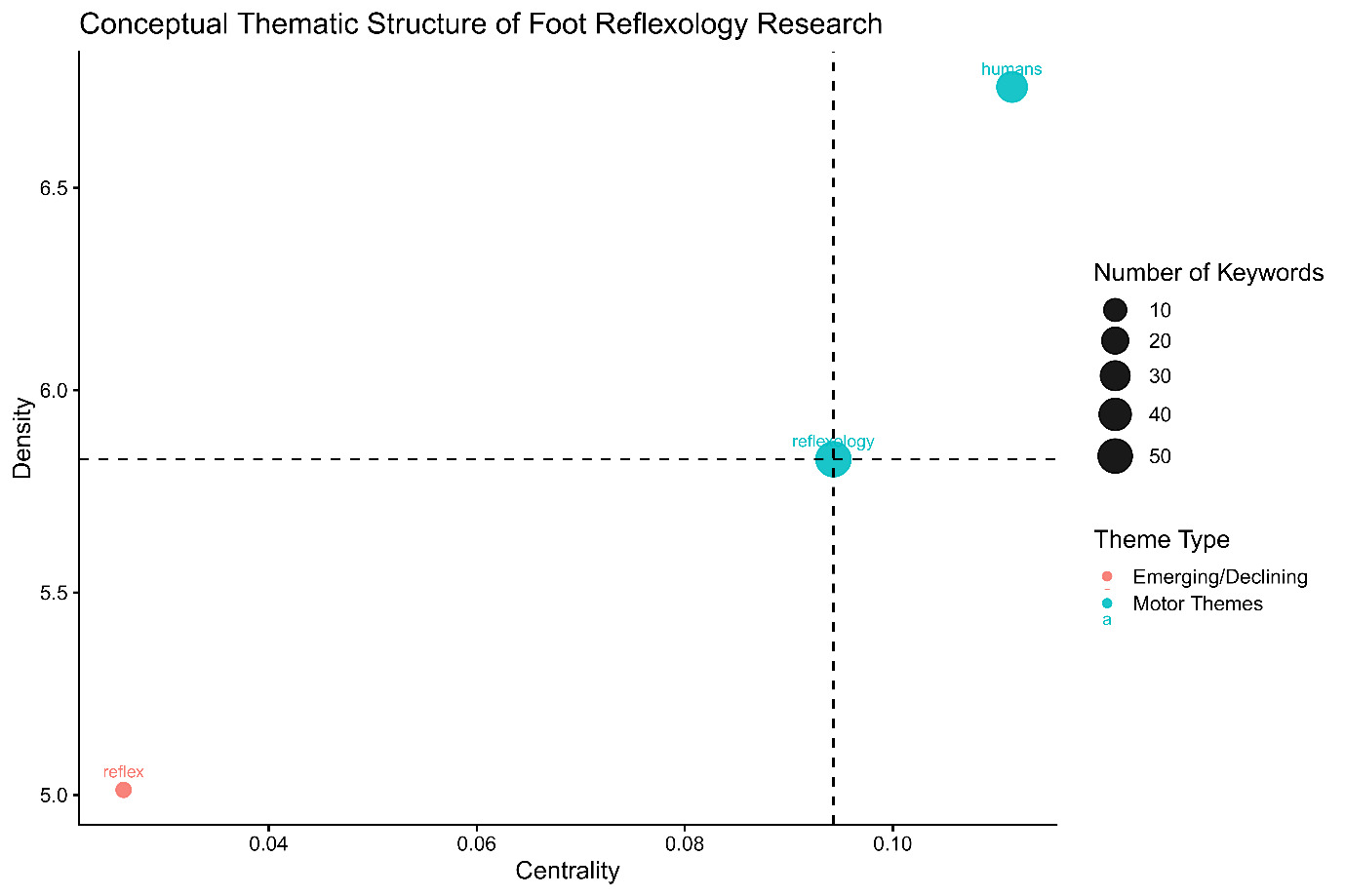
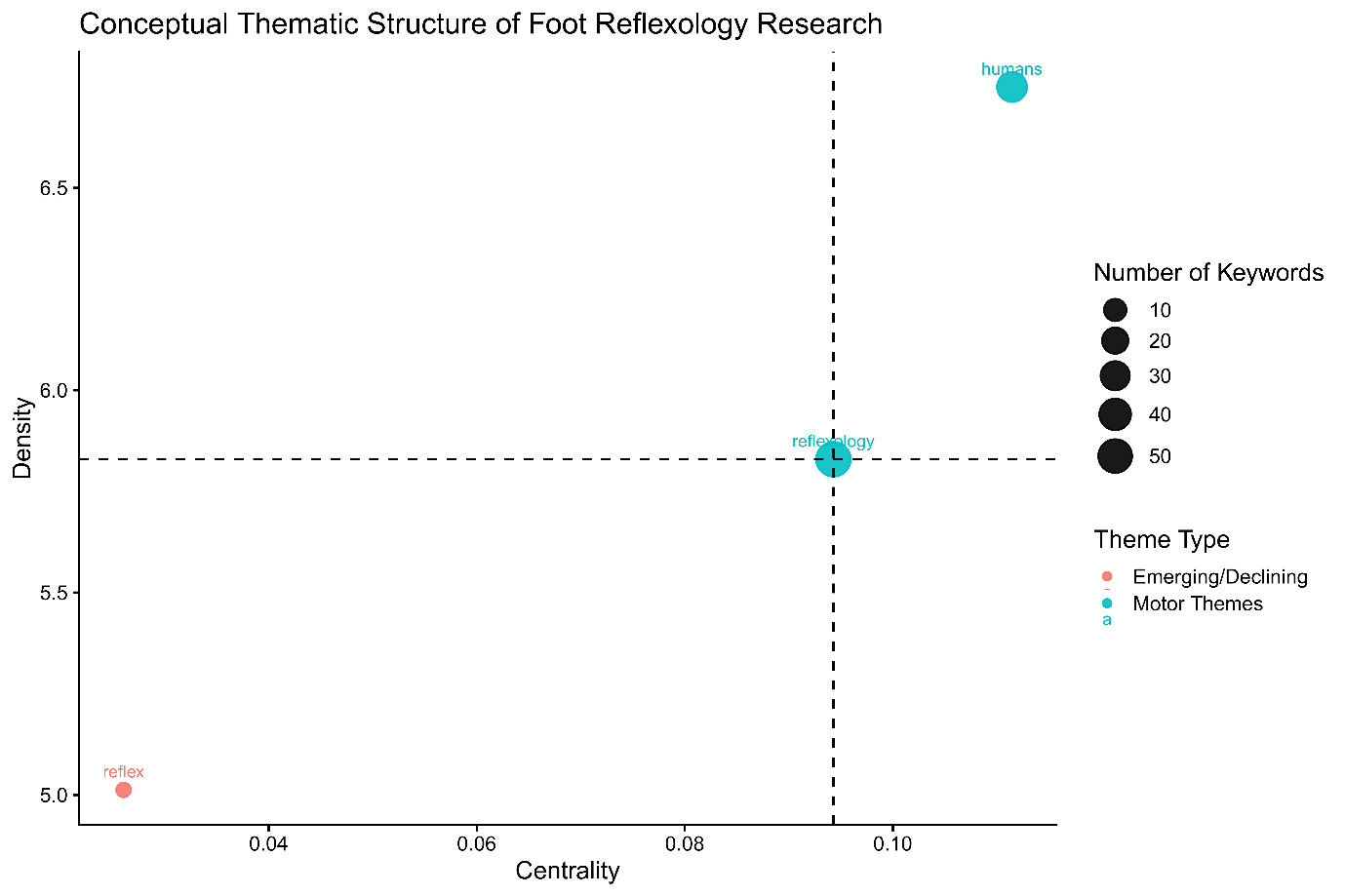
Figure 6 presents the strategic thematic map of foot reflexology research based on centrality and density metrics. To further examine the strategic development of thematic domains within foot reflexology research, a thematic map based on keyword co-occurrence was constructed using centrality and density metrics. Centrality reflects the degree of interaction of a theme with other themes in the network, whereas density indicates the internal cohesion and level of development of each thematic cluster.
The strategic diagram shows a concentrated conceptual structure, with a limited number of dominant themes rather than a fully distributed four-quadrant configuration. Two themes—“humans” and “reflexology”—are positioned in the upper-right quadrant (motor themes), indicating high centrality and high density. This suggests that these themes are both well-developed and strongly interconnected, forming the core of the research field.
In particular, “humans” exhibits the highest density and centrality values, reflecting its broad applicability and integration across studies, while “reflexology” occupies a similarly central position, confirming its role as the principal conceptual anchor of the field.
In contrast, the theme “reflex” appears in the lower-left quadrant (emerging or declining themes), characterized by low centrality and low density. This positioning suggests limited integration within the broader research network, indicating either a marginal or less developed thematic area.
Notably, the diagram does not display clearly defined niche or basic themes, which may indicate that the conceptual structure of the field is primarily driven by a limited number of highly interconnected domains.
Overall, the thematic map highlights a concentrated and well-established research structure, dominated by core motor themes with limited dispersion into peripheral or specialized thematic areas.
3.14. Trend Topics over Time
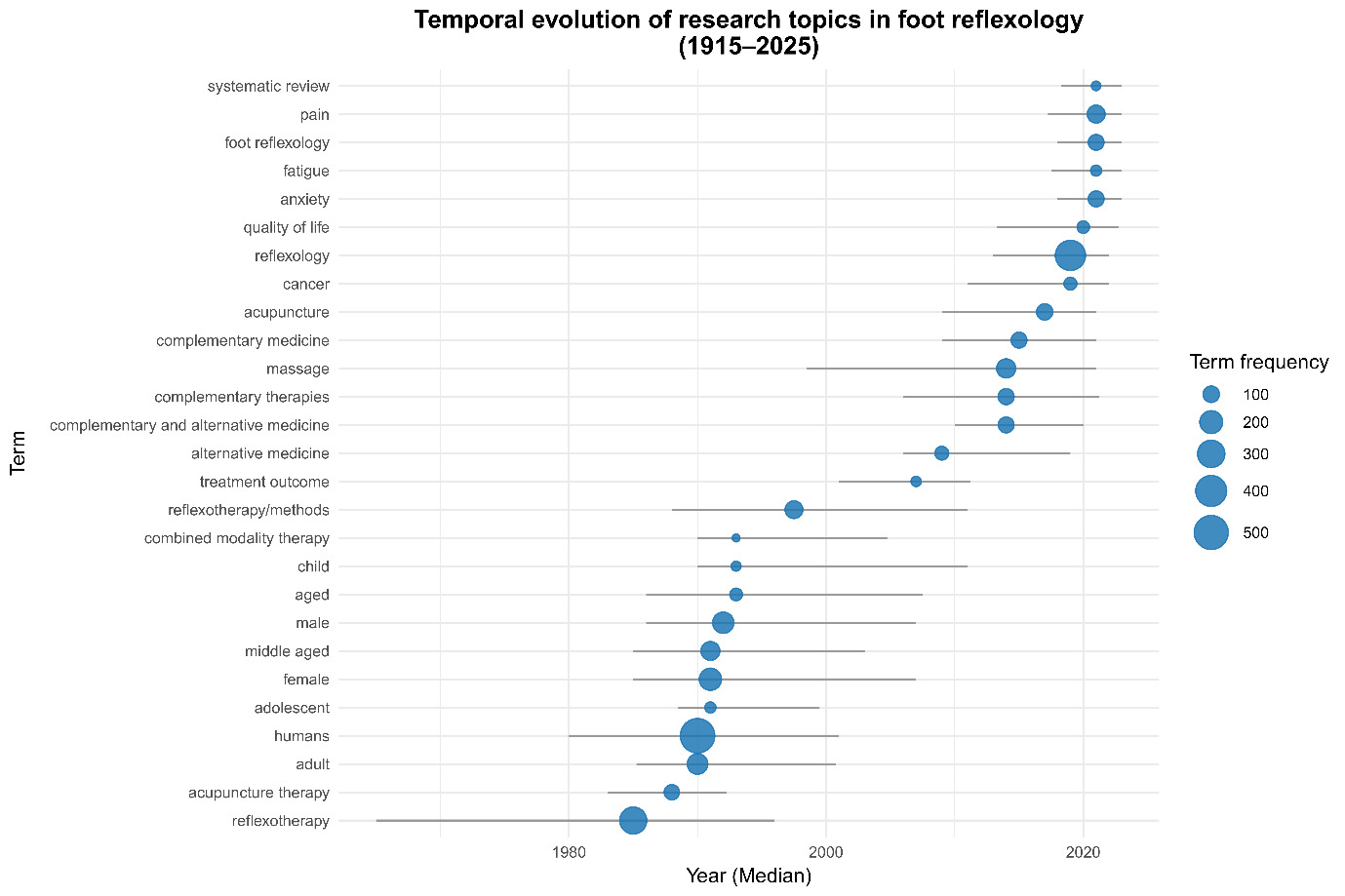
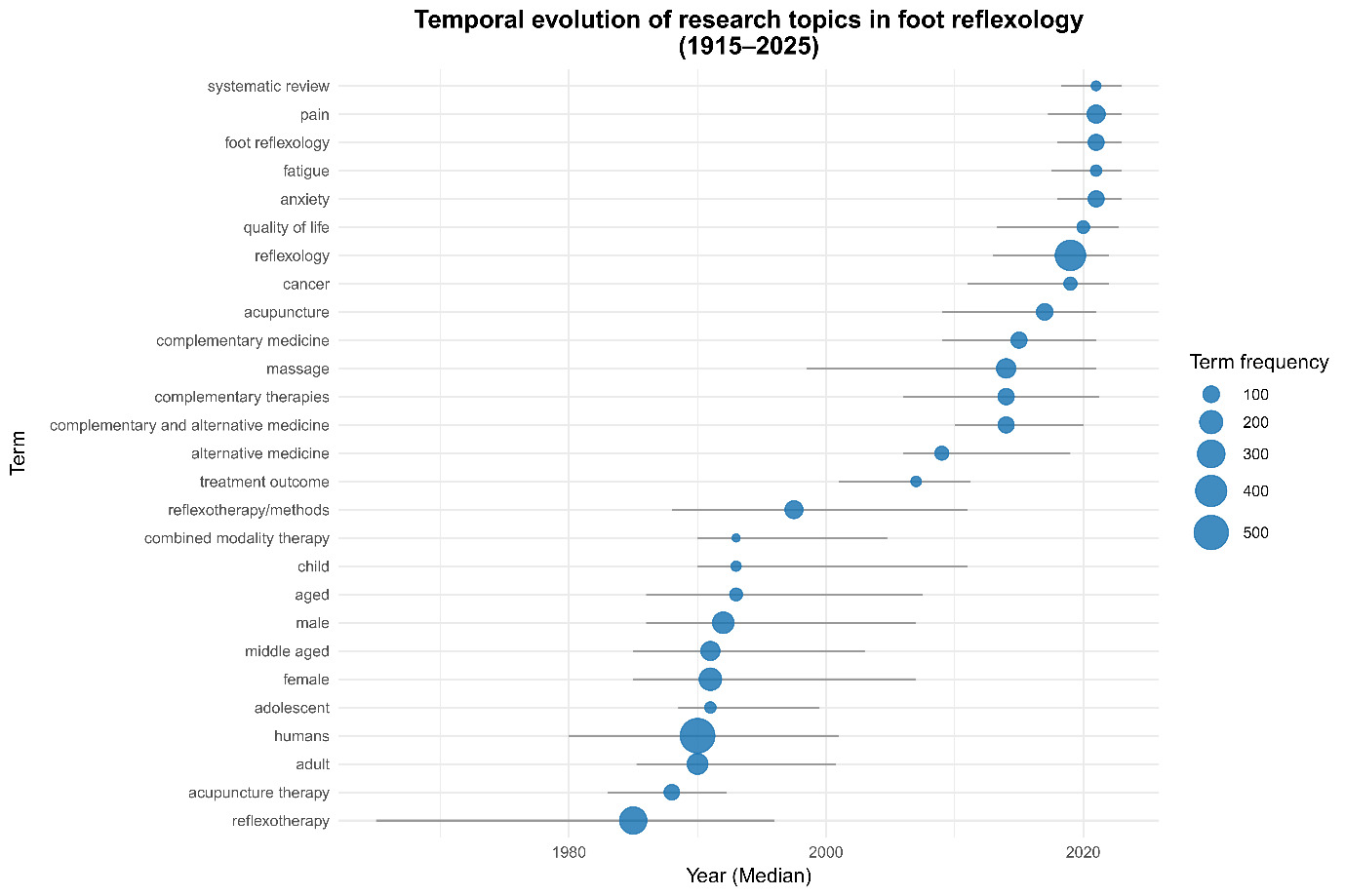
Figure 7 presents the temporal distribution of high-frequency keywords in foot reflexology research. Research trends were analyzed using high-frequency keywords in the dataset, allowing the identification of dominant thematic trajectories in foot reflexology research over time.
Earlier terms, such as reflexotherapy, acupuncture therapy, and demographic descriptors including humans, male, female, and adult, are predominantly concentrated between the late 1980s and early 2000s. These terms reflect the initial structuring of the field, characterized by broad clinical and population-based descriptors, as well as its integration within the wider context of complementary and integrative medicine.
From the mid-2000s onward, there is a visible expansion toward clinical application and integrative care contexts, with increasing prominence of terms such as massage, acupuncture, cancer, complementary therapies, and treatment outcome. This shift indicates a growing focus on patient-centered interventions and the application of reflexology within clinical and supportive care settings, particularly in oncology.
In more recent years, especially after 2015, the most temporally central and frequent terms include pain, anxiety, fatigue, quality of life, and foot reflexology. This pattern indicates increasing concentration around symptom-oriented therapeutic outcomes and standardized clinical constructs. Additionally, the appearance of terms such as systematic review suggests increasing attention to evidence synthesis, although these remain less frequent compared to core clinical terms.
Overall, the temporal distribution of keywords demonstrates a gradual transition from general clinical and demographic descriptors toward more specific symptom-focused and evidence-oriented research themes, highlighting the progressive structural consolidation of foot reflexology research.
4. Discussion
Scientific production in foot reflexology research accelerated markedly after the early 2000s. This trend may reflect the broader expansion of integrative medicine within healthcare systems and the progressive institutionalization of complementary and integrative medicine (CIM), developments recognized in global health policy frameworks such as the WHO Traditional Medicine Strategy.1 The increasing incorporation of non-pharmacological interventions into oncology and palliative care contexts may have further contributed to growing scientific interest in symptom-oriented complementary approaches, particularly for pain, anxiety, fatigue, and quality of life outcomes.7,17 Together, these structural transformations may help explain part of the sustained growth trajectory observed in foot reflexology research, although other factors, including changes in database coverage, publication practices, and research funding priorities, may also have contributed.
The conceptual structure of foot reflexology research indicates a progressive transition from a broad complementary medicine framework toward increasingly targeted clinical applications. In its earlier phases, reflexology was predominantly situated within the generic domain of alternative or complementary medicine, reflecting its integration into the expanding CIM movement.1 Over time, thematic clustering reveals a shift toward more structured clinical contexts, particularly in oncology and quality-of-life research, consistent with the growing incorporation of complementary therapies into supportive care frameworks.17 In more recent years, the prominence of symptom-specific terms such as pain, anxiety, fatigue, and sleep disturbances suggests increasing emphasis on clinically relevant and measurable outcomes, consistent with contemporary integrative care frameworks that prioritize patient-centered and symptom-oriented interventions.7,17 This pattern is consistent with the growing concentration of research in oncology, supportive care, and symptom-management settings identified throughout the present analysis.
The distribution of publications across journals further reinforces the applied clinical orientation of foot reflexology research. The presence of studies in outlets such as Supportive Care in Cancer, as well as nursing journals and integrative medicine platforms, suggests increasing scholarly interest in reflexology within oncology, supportive care, and integrative medicine contexts. However, publication patterns alone should not be interpreted as evidence of widespread clinical integration or endorsement. This pattern aligns with international guidelines that recognize selected complementary therapies as part of symptom management strategies in cancer care.17 The prominence of nursing-focused journals also suggests integration into routine clinical practice, particularly in palliative contexts where non-pharmacological approaches are frequently used to address pain, anxiety, fatigue, and quality-of-life outcomes. Taken together, these findings indicate that the field has evolved primarily as an applied and pragmatic domain, with emphasis on clinical implementation and symptom management rather than on mechanistic or basic science investigation.
The geographic distribution of citation impact reveals a structured pattern of scientific influence within foot reflexology research. The United States and the United Kingdom emerge as the primary hubs of scientific influence, with the United States leading in total citation counts. In contrast, countries such as Canada and Norway demonstrate higher average citations per article, suggesting greater per-document impact despite lower overall productivity. Meanwhile, Iran exhibits high publication volume accompanied by comparatively lower average citation rates, illustrating the distinction between quantitative output and global influence. It is noteworthy that Cai et al. (2023)9 reported the United States, Iran, and Turkey as the top three contributing countries based solely on Web of Science data from 1991 to 2021. In contrast, the present multi-database analysis (1915–2025) places Iran first, followed by the United States and the United Kingdom. This divergence likely reflects the broader coverage of PubMed and Scopus, which index a larger number of nursing and Iranian journals that are underrepresented in Web of Science, combined with the extended temporal window that captures earlier and more recent contributions from additional regions. These patterns are consistent with broader evidence indicating that citation impact is strongly associated with research system maturity, international collaboration networks, and structural positioning within the global scientific landscape.18,19 Such disparities highlight persistent asymmetries in visibility and knowledge circulation within complementary and integrative medicine research, reflecting structural inequalities in global science rather than differences solely attributable to thematic relevance or methodological quality.
The analysis suggests a relatively decentralized structure, although certain authors occupy more central and influential positions within collaborative networks. This distribution is consistent with the findings of Cai et al. (2023),9 who also identified Wyatt and Sikorskii as highly productive authors. The present study corroborates their central role, with Wyatt ranking first and Sikorskii third in publication output. Ernst ranked second in the current analysis, while Victorson, although seventh in productivity, maintained high structural centrality in the collaboration network. These convergent findings regarding leading authors provide cross-validation of the core contributors in foot reflexology research, despite differences in database coverage and time span between the two studies. The absence of a single overwhelmingly dominant author, together with a moderate concentration of output among leading contributors, indicates a pattern of distributed scientific leadership rather than monopolized authority. This configuration is consistent with bibliometric models of scientific productivity, particularly Lotka’s Law.20 However, in the present field, the concentration does not appear extreme, suggesting a fragmented yet collaborative network structure. Such dispersion may reflect the interdisciplinary and applied nature of reflexology research, which spans oncology, nursing, rehabilitation, and integrative medicine contexts.
The editorial landscape of foot reflexology research demonstrates a marked concentration within journals dedicated to complementary and integrative medicine, as evidenced by the predominance of specialized outlets in the leading sources. These journals also emerged as the most productive outlets in the bibliometric analysis by Cai et al. (2023),9 reinforcing the editorial concentration of foot reflexology research within specialized complementary and integrative medicine journals. At the same time, the progressive inclusion of publications in oncology, nursing, and broader clinical journals indicates expanding integration into applied healthcare contexts. This pattern suggests that while reflexology research remains relatively peripheral to mainstream biomedical journals, it has achieved institutional stability within the complementary medicine ecosystem. Similar publication dynamics have been described in other CIM domains, where specialized journals function as core dissemination platforms while gradual cross-disciplinary integration reflects progressive clinical legitimization.18 Together, these findings indicate a field that is editorially consolidated yet still navigating its positioning within the broader hierarchy of biomedical publication systems.
The emergence of “systematic review” among recent trending topics suggests increasing engagement with evidence synthesis within foot reflexology research. The growing production of evidence syntheses reflects a transition from predominantly exploratory and descriptive studies toward more structured efforts to evaluate clinical effectiveness and summarize the existing literature. This shift aligns with broader movements within integrative medicine emphasizing evidence-based frameworks and formalized appraisal of complementary interventions.17,21 The increasing presence of systematic reviews suggests that the field is undergoing structural and editorial consolidation, with growing attention to evidence synthesis, effect consistency, and reproducibility. However, because the present bibliometric analysis did not assess the methodological quality of individual studies, these findings should not be interpreted as direct evidence of methodological improvement in the underlying research.
Despite its expansion and clinical integration, foot reflexology research exhibits structural limitations that may constrain interpretability and translational impact. A substantial proportion of studies focus on subjective outcomes such as pain, anxiety, fatigue, and quality of life, while relatively few investigations explore physiological or mechanistic pathways that could clarify biological plausibility. In addition, the field shows strong dependence on specific clinical contexts, particularly oncology and supportive care, which may limit generalizability across broader patient populations. These characteristics are not unique to reflexology and are frequently observed in symptom-oriented complementary therapies, where pragmatic implementation often precedes mechanistic elucidation.22 Recognition of these structural features is essential for balanced interpretation of the field’s development.
This analysis is subject to limitations inherent to bibliometric methodologies, including dependence on database indexing practices, potential language bias, sensitivity to metadata harmonization procedures, and the use of database-indexed citation counts that do not distinguish between external citations and self-citations. Although broader reflexology-related terms were included to maximize sensitivity, a post-hoc audit showed that potentially non-foot reflexology records represented only 1.0% of the final corpus, suggesting minimal impact on the overall bibliometric findings. Additionally, historical differences in database coverage should be considered when interpreting long-term publication trends. Records from earlier decades were primarily retrieved through Web of Science, whereas part of the apparent acceleration in scientific production after the early 2000s may reflect the broader journal coverage introduced by Scopus and the progressive expansion of database indexing over time. Therefore, growth trajectories should be interpreted as reflecting both the evolution of the field and changes in bibliographic database coverage. Furthermore, CINAHL was not searched. Consequently, some nursing-focused records may have been missed, although a formal assessment of overlap between CINAHL and the databases used in this study was not performed. Additionally, indexing lag may have affected the coverage of publications from late 2025, as some recently published articles may not yet have been fully indexed across all databases at the time of data retrieval.
A formal methodological quality assessment of individual studies was not performed. Consistent with established guidelines for bibliometric and science mapping reviews, the main objective of this type of study is to describe, quantify, and map patterns of scientific production rather than to critically evaluate the methodological quality or risk of bias of individual investigations. Therefore, the findings of this study should be interpreted as indicators of the development, intellectual structure, and trends of foot reflexology research, and not as an appraisal of the strength of evidence of the primary studies.
Future research in foot reflexology should prioritize multicenter pragmatic trials capable of evaluating real-world effectiveness across diverse clinical populations. Greater investment in mechanistic studies is also warranted to elucidate potential neurophysiological and autonomic pathways underlying observed symptom improvements. Standardization of intervention protocols, including session duration, pressure techniques, and frequency of application, would enhance reproducibility and comparability across studies. Furthermore, advanced meta-analytic approaches incorporating subgroup analyses may clarify heterogeneity across clinical conditions and outcome domains. Such developments would support the transition from descriptive expansion to methodological refinement and strengthen the evidentiary foundation required for broader clinical integration.
5. Conclusion
This study provides a comprehensive bibliometric overview of the evolution and intellectual structure of foot reflexology research. The findings suggest that the field has developed from a broadly defined complementary therapy domain into a more structured area of inquiry focused on clinically relevant outcomes and supportive care applications. Continued progress will depend on methodological rigor, international collaboration, and the production of high-quality evidence capable of informing clinical decision-making and healthcare integration.
Conflict of Interest / Competing Interests
One of the authors (ZK) serves as a member of the Editorial Board of Inquisiva Open. To avoid any potential conflict of interest, this manuscript was handled independently and anonymously by an editor who was not involved in the authorship of the work, and the peer review process was conducted in accordance with the journal’s standard editorial procedures. The authors declare no other conflicts of interest relevant to this work.
Ethics Approval and Consent
This study did not involve human participants, animals, or identifiable personal data. It was based exclusively on bibliographic records retrieved from scientific databases and therefore did not require ethics approval or informed consent.
AI Tool Use Disclosure
Artificial intelligence tools were used for language editing and formatting only. All scholarly content, analyses, interpretations, references, tables, and figures were reviewed and verified by the authors.
Third-Party Material Permissions
All tables and figures are original outputs generated from the authors’ bibliometric analyses. No third-party material requiring permission has been used in this manuscript.
Data Availability
The bibliographic data analyzed in this study were retrieved from PubMed, Scopus, and Web of Science. The processed dataset and analysis materials are available from the corresponding author upon reasonable request, subject to database licensing restrictions.
Funding
This research received no external funding.
Reporting Guidelines
This bibliometric and science-mapping study was conducted and reported in accordance with the Guidelines for Bibliometric-Systematic Literature Reviews (BSLR) and the BIBLIO recommendations for reporting bibliometric reviews.
Protocol Registration
No formal protocol registration was required for this study design.
Trial Registration
Not applicable. This study was not a clinical trial.
Preprint Disclosure
This manuscript has not been posted as a preprint and has not been previously published.
Author Contributions (CRediT)
Conceptualization: Maria do Carmo Frechiani (Equal), Samara Oliveira Mattoso (Equal), Matheus Hissa Lourenço Ferreira (Equal), Zahid Khan (Equal). Data curation: Maria do Carmo Frechiani (Equal), Matheus Hissa Lourenço Ferreira (Equal). Formal Analysis: Maria do Carmo Frechiani (Equal), Matheus Hissa Lourenço Ferreira (Equal). Validation: Maria do Carmo Frechiani (Equal), Samara Oliveira Mattoso (Equal), Matheus Hissa Lourenço Ferreira (Equal), Zahid Khan (Equal). Writing – original draft: Maria do Carmo Frechiani (Equal), Samara Oliveira Mattoso (Equal), Matheus Hissa Lourenço Ferreira (Equal), Zahid Khan (Supporting). Writing – review & editing: Maria do Carmo Frechiani (Equal), Samara Oliveira Mattoso (Equal), Matheus Hissa Lourenço Ferreira (Equal), Zahid Khan (Equal). Methodology: Samara Oliveira Mattoso (Equal), Matheus Hissa Lourenço Ferreira (Equal), Zahid Khan (Equal). Visualization: Samara Oliveira Mattoso (Equal), Matheus Hissa Lourenço Ferreira (Equal), Zahid Khan (Equal). Supervision: Zahid Khan (Lead).
Abbreviations
BSLR, Bibliometric-Systematic Literature Review; CAGR, compound annual growth rate; CIM, complementary and integrative medicine; MCA, multiple correspondence analysis; WoS, Web of Science.